I’ve put in a solid effort into maximum tourist mode since arriving in Berlin with zero plans. Despite staying within spitting distance of Check Point Charlie I, one, still have no idea if I’m in East or West Berlin and two, still don’t really have a clear idea of why Berlin was divided in the first place. I mean, I know the general idea, but I am still piecing together the complex political history of this city.
I’ve tramped across to Museum Island and through Scheuenviertel, Mitte, Gesundbrunnen and up and down to the intersection of Friedriechstrasse and Unter den Linden. If that means nothing to you, don’t mind, suffice to say I’ve covered about 25ks weaving around town.
More exhausting then all the walking has been all the truly horrific histories and stories of the world wars and then the absurdity of the cold war. My brain is at absolute saturation. I really have to acknowledge the guides who’ve made these topics accessible.
In Gesundbrunnen Subway is one of the few intact and open to the public Luftschutzraum (air raid bunker) and is a fascinating look into the life of the citizens of Berlin during the blitz. Berliner Unterwelten E.V. is a not for profit that aims to preserve the subterranean history of the city – not just the bunkers but the Rohrpost – a pneumonic tube postal service that guaranteed delivery of a message and response within two hours.
On the way to the subway I’d passed the Brandenburger Gate, not entirely understanding its significance and then to the Memorial to the Murdered Jews of Europe which is honestly eerie and gloomier probably because of the rain, and definitely not the reminder of organised mass murder. I really tried not to snort when I saw an estate agent showing apartments across the road – what do you say to perspective tenants? And from this window you can see a lovely vista of the memorial. Supposedly this means you can start every day with the Holocaust on your mind.
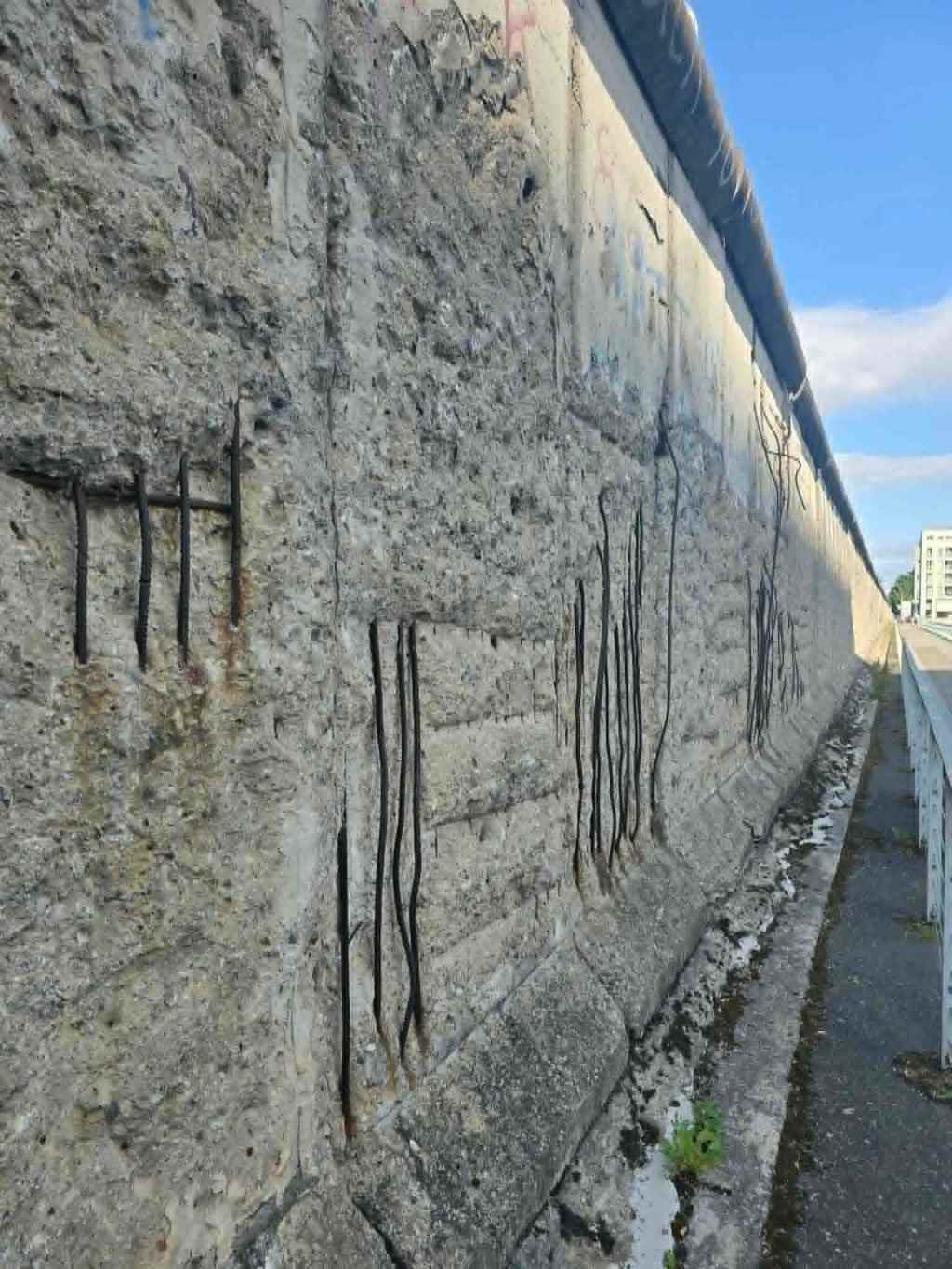
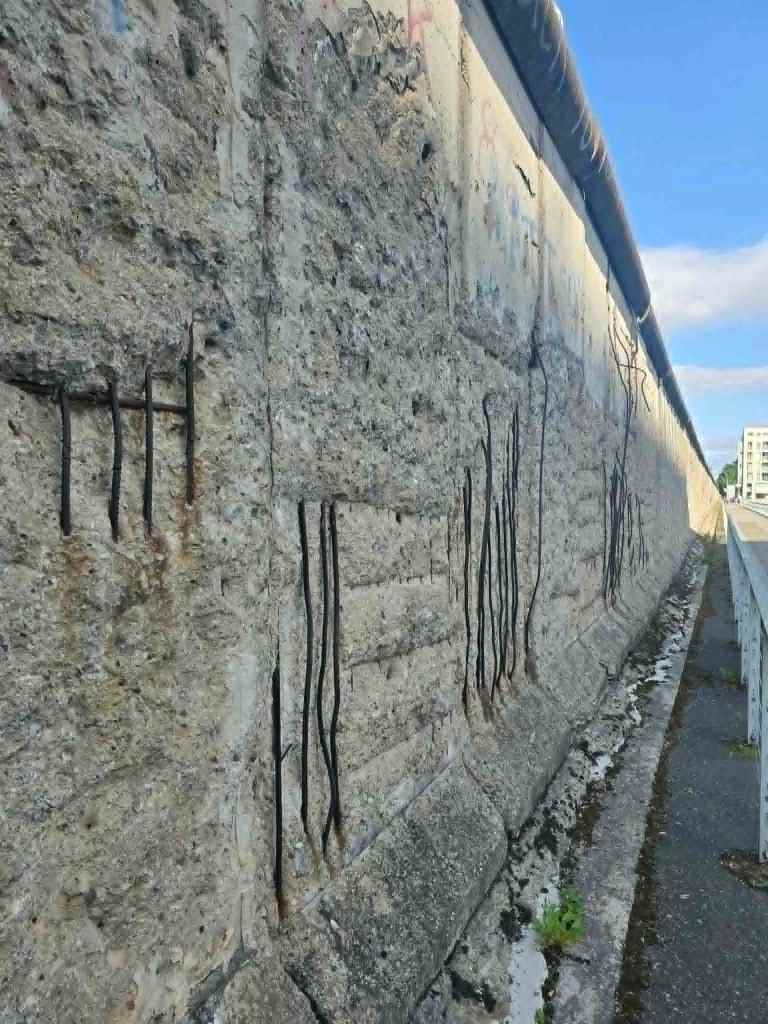
After the bunkers I returned to visit an expedition of Die Mauer (The Wall) – a panorama of what the Berlin Wall looked like in the 80s. The installation is about 60 square meters looking from west to east Berlin across the Death Zone. The wall was constructed in 1961 and pulled down in 1989, a few sections remaining throughout the city. One of these is at the Topography of Terror which is a Dokumentationszentrum – which is something akin to Museum but with a more overt purpose to educate on atrocities of the Nazi’s, and in this case specifically the Gestapo, the SS and the SA Stormtroopers.
Fun.


Leave a Reply